
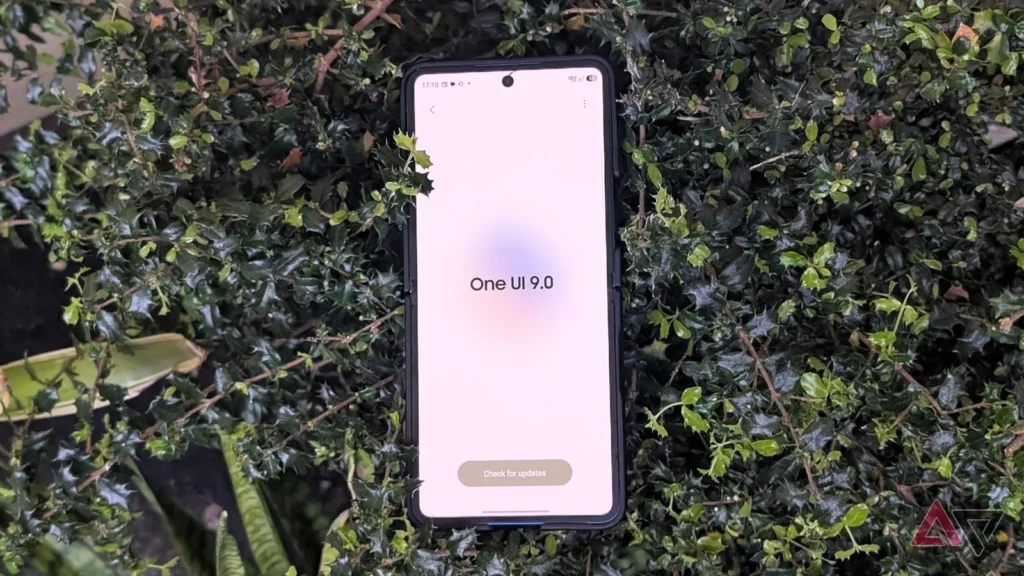
Samsung Galaxy S26 One UI 9 Bug: Official Fix & Troubleshooting Guide
# Samsung Galaxy S26 One UI 9 Bug: Official Fix & Troubleshooting Guide
Major OS updates occasionally introduce critical software-level hitches. Samsung has officially acknowledged and rolled out a targeted patch for a severe bug impacting Galaxy S26 devices running One UI 9.
As elite hardware-certified repair technicians, we have analyzed the firmware conflict and compiled the definitive troubleshooting and remediation guide to restore your device to optimal performance.
—
Understanding the One UI 9 Bug on Galaxy S26
Software bugs in modern mobile operating systems often manifest as high thermal output, UI hitching, unresponsive touch inputs, or boot loops. Because modern smartphone architecture tightly integrates hardware execution with the operating system kernel, an unpatched system bug can mimic hardware failure—causing erratic battery drain and sensor misfires.
Framebuffer & Display Diagnostics: Remember our core diagnostic rule: if a visual glitch or artifact appears when capturing a screenshot and viewing it on another healthy device, the issue is 100% software/GPU related (as opposed to a physical panel hardware failure). If the screenshot appears completely clean and free of artifacts on another display while the glitch is visible on your physical screen, you are dealing with a hardware-level failure (such as a damaged AMOLED panel, flex cable, or display controller IC).
Thermal Management: If your Galaxy S26 is running abnormally hot during this bug state, do not panic; it is typically an infinite CPU loop caused by a background system service crashing and restarting repeatedly.
—
Step-by-Step Resolution Guide
Step 1: Verify and Apply the Official OTA Patch
Samsung’s hotfix is delivered via Over-The-Air (OTA) firmware updates. Follow this exact path to pull the latest system patch:
- Open Settings.
- Scroll down and tap Software update.
- Select Download and install.
- If an update is available, follow the prompts to download and complete the installation. Ensure your device is charged above 50% or connected to a charger during the update process.
Step 2: Clear the System Cache Partition
If the bug persists after applying the patch due to lingering corrupted cache files from the initial One UI 9 installation, clear the system cache via Recovery Mode:
- Power down your Galaxy S26 completely.
- Connect the phone to a PC via a USB-C cable (a mandatory trigger for modern Samsung recovery entry).
- Press and hold the Volume Up and Side (Power) buttons simultaneously until the Samsung logo appears.
- Use the Volume Down button to navigate to Wipe cache partition.
- Press the Side (Power) button to select.
- Navigate to Yes and press the Side (Power) button to confirm.
- Select Reboot system now.
Step 3: Safe Mode Isolation
To rule out third-party application conflicts exacerbated by the One UI 9 framework shift:
- Press and hold the Side (Power) and Volume Down buttons until the power menu appears.
- Tap and hold the Power off icon until the Safe mode prompt appears.
- Tap Safe mode.
- Test your device functionality. If the bug disappears in Safe mode, a third-party application is clashing with the new OS. Uninstall recently updated apps one by one until normal operations resume.
—
Preventive Maintenance
To prevent system corruption during major firmware transitions on high-end hardware like the Galaxy S26:
Always back up your critical data via Smart Switch or Samsung Cloud before initiating major OS upgrades.
Avoid interrupting firmware flashes or forced reboots during active system installations to preserve the integrity of the NAND flash memory.