
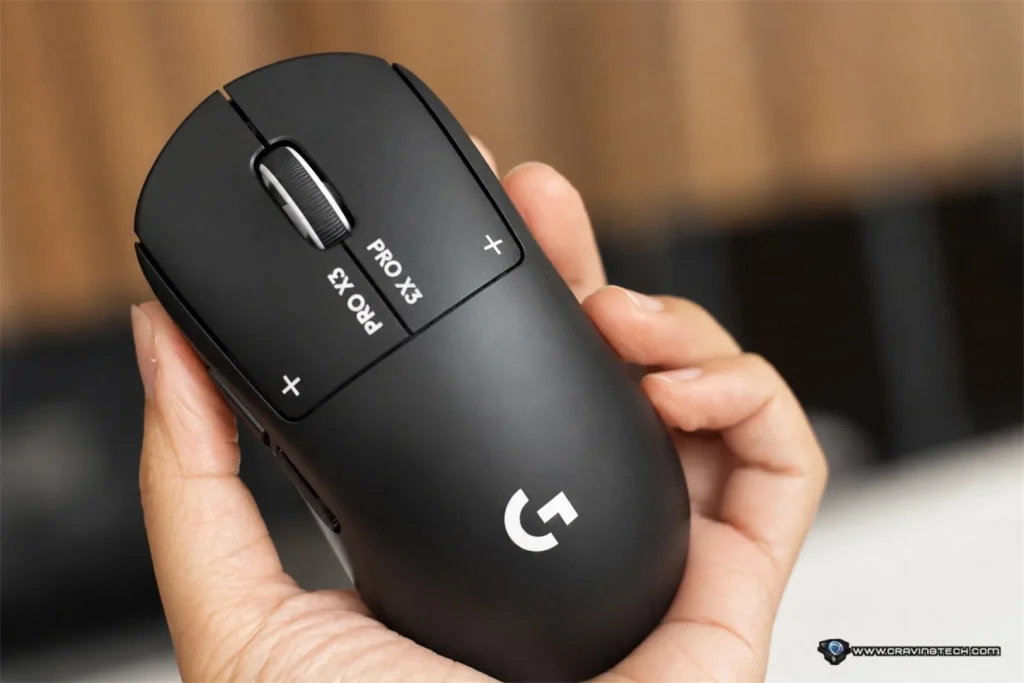
Logitech G Pro X3 Superstrike Review: $200 for the Illusion of a Click
The $200 Logitech G Pro X3 Superstrike is an elite, ultra-lightweight wireless competitive gaming mouse that justifies its astronomical price tag through next-generation 8,000 Hz polling and a rebalanced center of mass, though its synthetic optical-mechanical clicks may alienate purists.
The $200 price barrier for PC peripherals has officially crossed from “enthusiast tax” into the realm of psychological warfare, and Logitech’s latest rodent is leading the charge.
The Logitech G Pro X3 Superstrike arrives as a minor yet undeniably noticeable update to a lineage that has dominated esports arenas for years. Beneath the familiar matte-black silhouette lies a heavily overhauled internal architecture featuring a brand-new proprietary chipset and a completely rebalanced weight distribution designed to appease low-sensitivity, arm-aiming purists. It lasts longer on a single charge and glides with a hypnotic, featherlight consistency, but a two-hundred-dollar asking price forces a brutal question: are we paying for technological revolution, or are we just paying for the logo?
Hardware Quick-Facts & Multiplayer Compatibility
Device Type: Wireless Competitive Gaming Mouse
Connectivity: 2.4GHz Wireless (True 8,000 Hz Hyper-Polling)
Multiplayer Status: Online Competitive / LAN Ready (Optimized for low-latency network environments in titles like Counter-Strike 2 and Valorant)
Technical Specifications & Evolution
To understand where the G Pro X3 Superstrike sits in the grand pantheon of competitive mice—and how its bleeding-edge telemetry directly impacts high-stakes online execution—it helps to look backward at how far the hardware has come. Below is a technical comparison tracking the evolution from the baseline wireless standard to this modern ultra-luxury revision.
| Feature / Metric | Logitech G Pro Wireless (Legacy) | Logitech G Pro X2 Superlight | Logitech G Pro X3 Superstrike (2026) |
|---|---|---|---|
| Sensor / Chipset | HERO 16K | HERO 2 (25K DPI) | Next-Gen Proprietary Ultra-Low Latency Chipset |
| Weight | 80g | 60g | 58g (Precision Rebalanced Center of Mass) |
| Polling Rate (Native) | 1,000 Hz | 2,000 Hz (Dongle Required) | True 8,000 Hz Hyper-Polling Out of the Box |
| Battery Life | ~48 Hours | ~95 Hours | ~120 Hours (Optimized Power Draw) |
| Primary Switches | Mechanical Omron | Lightforce Hybrid Switches | Tactile-tuned Optical-Mechanical Hybrid |
Design, Feel, and the “Illusion” of the Click
Logitech has clearly spent countless engineering hours shifting internal components to achieve a near-perfect center of gravity. Where past iterations felt slightly back-heavy due to battery placement, the Superstrike floats in the hand. The micro-adjustments required for tracking erratic strafe patterns in Counter-Strike 2 or Valorant feel frictionless.
However, the headline feature—the heavily marketed tactile tuning of the primary clicks—stumbles into a philosophical trap. By attempting to engineer the crispness of a traditional mechanical switch into an optical layout, Logitech has created an acoustic and tactile illusion. The clicks feel crisp, snappy, and virtually instantaneous, yet they lack the organic, raw feedback that purists demand at this tier. It feels synthesized. It feels expensive, clinical, and slightly hollow.
Performance and Battery
Where the Superstrike genuinely justifies its existence is endurance and latency. Out-of-the-box native 8,000 Hz polling delivers a connection so stable it practically eliminates input delay entirely, assuming your CPU can handle the polling overhead. Meanwhile, power efficiency has taken a massive leap forward; despite the relentless polling rate, the mouse easily clears over a week of heavy competitive play before demanding a USB-C cable.
Review Snippet
- Pros:
- Flawless, rebalanced weight distribution that significantly reduces wrist fatigue during intense online matches.
- Exceptional battery life even when utilizing native 8,000 Hz polling.
- Top-tier sensor tracking with zero smoothing or jitter.
- Cons:
- Astronomical $200 price tag makes it hard to justify over cheaper alternatives.
- Primary clicks feel overly synthesized and lack organic mechanical feedback.
- Minimal physical design changes compared to the previous generation.
Final Score: 8.0 / 10 (Great)
The Logitech G Pro X3 Superstrike is an engineering masterclass in weight distribution and power efficiency, but paying $200 for a mouse that feels this clinically synthetic is a luxury reserved strictly for the uncompromising elite.*